Reactive Governance
On-demand snapshot governance model resolving the DAO trilemma
Architecture, Analysis & Validation
Overview
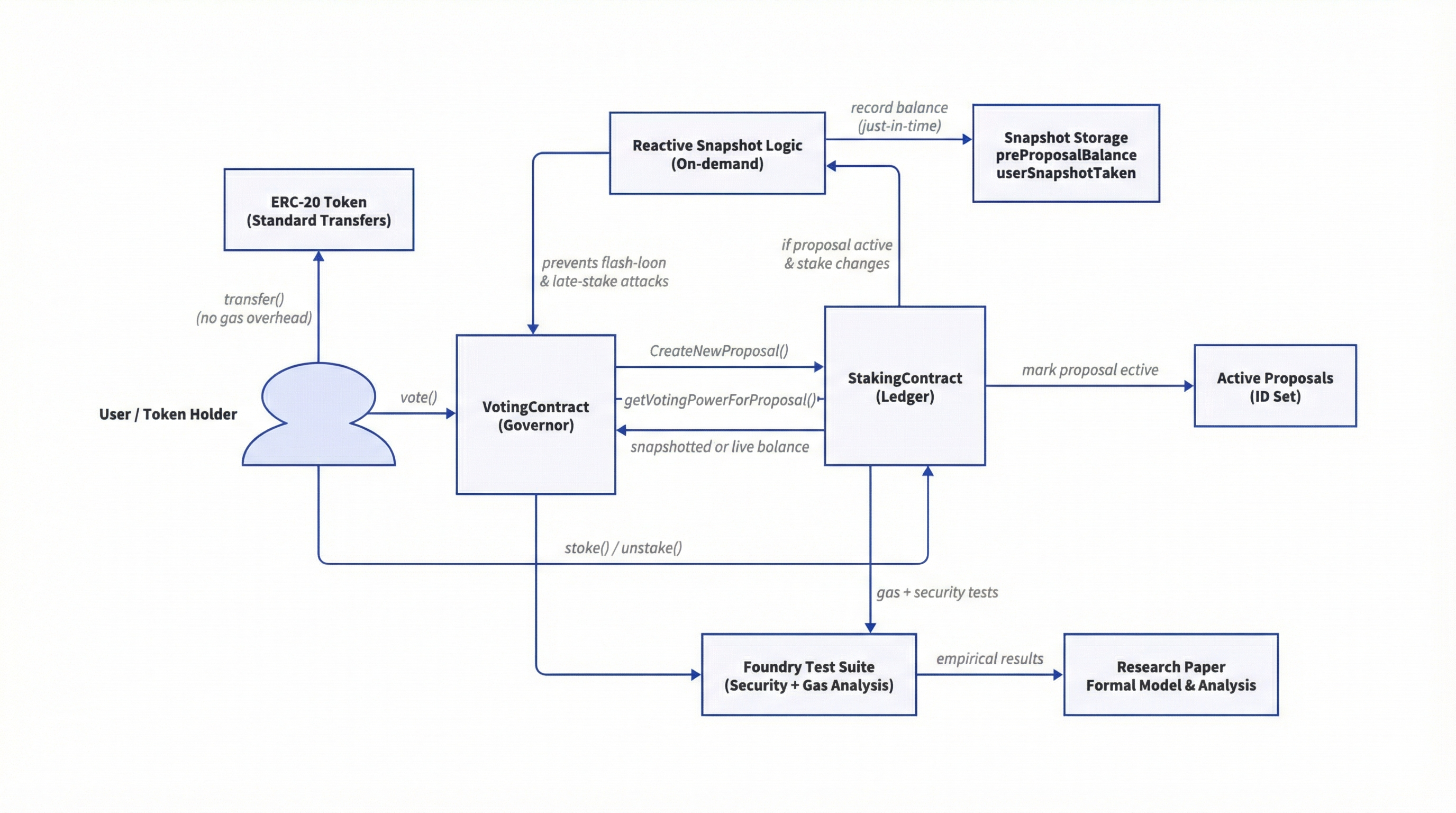
Reactive Governance introduces a selective, just-in-time snapshot mechanism for DAO voting. Instead of snapshotting balances continuously or looping over all stakers at proposal creation, balances are snapshotted only when a user attempts to change their stake during an active proposal.
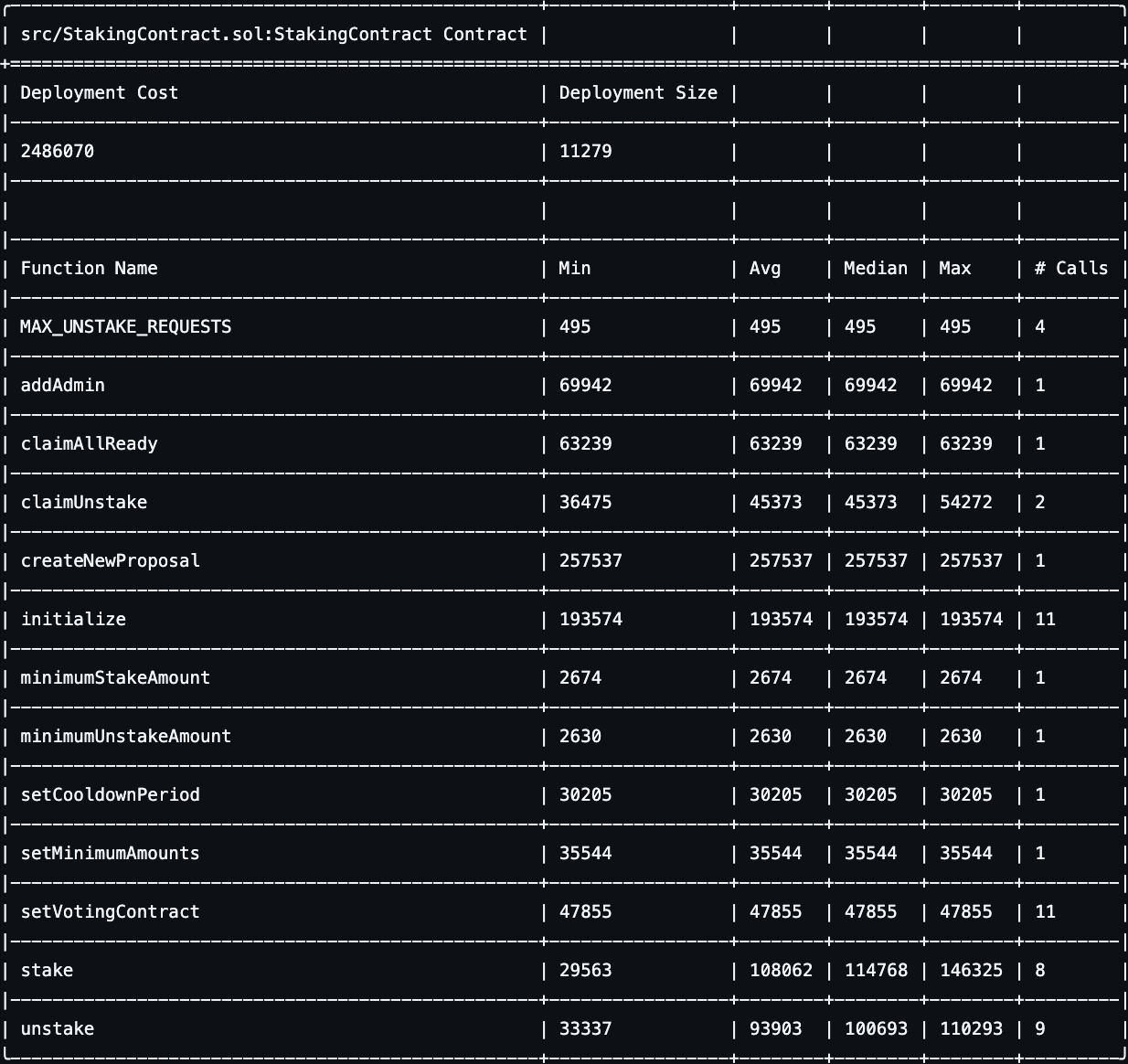
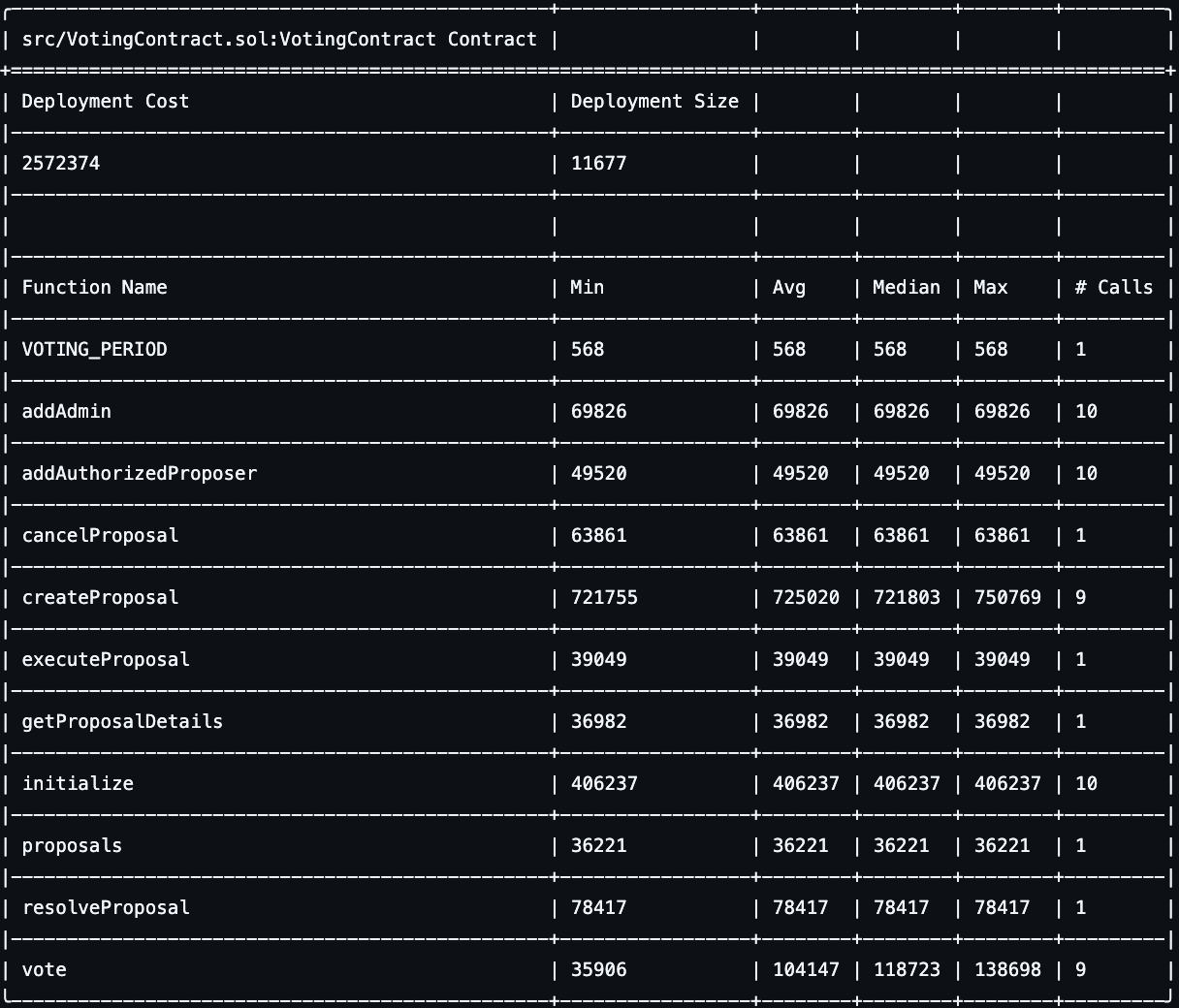
This project presents a new design pattern for on-chain DAO governance that resolves the long-standing trilemma between security, scalability, and ecosystem-wide gas efficiency. Unlike ERC20Votes-style continuous checkpointing, Reactive Governance imposes zero gas overhead on standard token transfers by eliminating automatic balance snapshots. Voting power is instead snapshotted reactively, only when a user stakes or unstakes during an active proposal period. The model prevents flash-loan based vote manipulation, late-stake attacks, and hostile proposal creation through a combination of selective snapshotting, mandatory unstaking cooldowns, and proposal lifecycle tracking. A full reference implementation was developed in Solidity using a modular StakingContract and VotingContract architecture. The system was rigorously tested using Foundry with multi-user simulations covering proposal creation, staking changes, voting, and attack scenarios. Empirical gas analysis demonstrates approximately 40% reduction in governance-related gas costs compared to ERC20Votes, while completely eliminating the hidden gas tax on token transfers. The research formalizes the security guarantees and validates them through extensive unit and integration tests.
Tech Stack
Key Features
- ✓Reactive, just-in-time balance snapshotting
- ✓Zero gas overhead on standard ERC-20 transfers
- ✓Resistance to flash-loan and late-stake attacks
- ✓Modular staking and voting contract architecture
- ✓Formal security reasoning with empirical gas benchmarks
- ✓Comprehensive Foundry test suite simulating multi-user governance lifecycles
Role
Protocol Designer & Smart Contract Developer
Timeline
2025